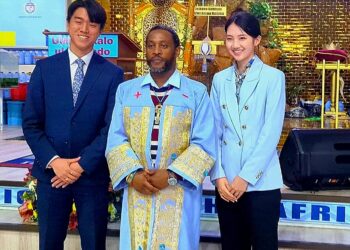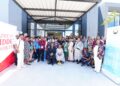




In September 2025, Inkosi yamaKhosi oMoya, Imboni Dr uZwi-Lezwe Radebe, honoured a prestigious invitation to the Olojo Festival in Ile-Ife, Osun State, Nigeria, one of the oldest and most spiritually revered festivals in Yoruba Land.
Hosted by His Majesty King Arole Oduduwa Olofin Adimula, custodian of Yoruba ancestry, this invitation was more than a diplomatic gesture. It was a moment of sacred alignment, affirming the restoration of Africa’s ancient spiritual order.

The Yoruba are among Africa’s most influential cultural groups, renowned for:
• advanced metalworking and artistic craftsmanship• historic kingdoms such as the Oyo Empire
• rich musical and visual traditions
• a deeply-rooted spiritual heritage centred on Ifa spirituality
• a global cultural footprint stretching from West Africa to the Caribbean and the Americas.
Ile-Ife, regarded in Yoruba cosmology as the cradle of humanity, holds unparalleled significance as a sacred place of creation.The 2025 Olojo Festival: One Race, One Source, One Festival. The festival was celebrated under the theme:“Tourism for Inclusive Growth, Cultural Rebirth, One Race, One Source, One Festival.”
Dignitaries included kings and traditional leaders from across Africa, government officials, royal families, and international delegations.
Olojo, meaning “The Day of the First Dawn,” commemorates the moment creation descended upon the earth. It symbolises:
• renewal
• unity
• divine kingship
• the eternal link between humanity and the spiritual realm.
During his stay, Inkosi yamaKhosi oMoya received royal honours befitting his sacred rank, his presence itself affirming the divine connection between African spiritual kingdoms and Indigenous knowledge custodians across the continent.
On his second night in Ile-Ife, Inkosi yamaKhosi received not a vision, but a spiritual dream of profound significance.He was shown the rebirth of spiritual royalty, signalling the revival of Africa’s ancient spiritual kingdom, a return to the sacred order where spiritual authority and kingship operate as one.
This dream echoed countless independent dreams reported across the years by people outside TRSH, complete strangers, who described:
• a golden crown prepared for Inkosi yamaKhosi
• the cosmic mountain Ekuphumuleni
• people receiving the Covenant of Restoration bracelet on the right wrist
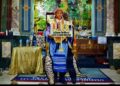
• Inkosi yamaKhosi in priestly regalia: leopard headdress, leopard hide, and spear
• gatherings of multiple tribes at Ekuphumuleni
When shown photographs, these individuals confirmed Inkosi yamaKhosi was the man in their dreams.Such dreams stand as independent spiritual affirmation, signs no human institution could orchestrate.
Together, they aligned perfectly with the dream received in Ile-Ife, marking a continental spiritual awakening.
Over time, Inkosi yamaKhosi oMoya has spiritually acquired sacred emblems that symbolise the rise of his divine kingship:
• The Crown – authority bestowed from the spiritual realm
• The Sceptre – divine governance and rulership
• The Throne – spiritual sovereignty
• A Spiritual Nation – a people (Amasosha)called into alignment with Africa’s restored spiritual order. These are not ceremonial items but spiritual milestones, each marking a new dimension in Inkosi yamaKhosi oMoya Imboni Dr uZwi-Lezwe Radebe’s reign as Spiritual King of Kings.
Divinely Sanctioned, Spiritually Governed, anthropological and historical studies affirm that African kingship was never simply political. It was:
• sanctioned by the spiritual realm
• guided by ancestors and deities
• validated by signs, dreams, cosmological events, and sacred rites.
Yoruba monarchs served as intermediaries between humanity and the divine, custodians of Ase, the spiritual force governing the universe.Similarly, West and Central African kingdoms believed kings were chosen through divine decree, not elections.
Ultimately, Inkosi yamaKhosi oMoya serves as an intermediary, connecting the spiritual and physical worlds and these experiences therefore align with well-documented African spiritual frameworks. They are a continuation of ancient heritage, not mythmaking, and not invention.
Inkosi yamaKhosi’s spiritual reign was further marked by a rare celestial event, a red blood moon witnessed on 31 July 2025 in Clocolan, Free State.
Across Africa, blood moons signify:
• ancestral alignment
• the rise of spiritual authorities
• cosmic transitions
• the dawn of new eras
In the indigenous traditions of Southern Africa, a red moon is a message from the upward spiritual dimension, a sign of profound spiritual shift.In this moment, it served as a celestial coronation, a cosmic stamp confirming his spiritual mandate, moreover marking the beginning of the Aquarius Era.
The emergence of this spiritual kingdom is not new. It is a revival of Africa’s ancient royal-spiritual systems that were disrupted through colonisation, displacement, and religious erasure.What Inkosi yamaKhosi received, both in Yoruba Land and through the divine dream, is the rekindling of Africa’s original spiritual monarchy, governed by:
• divine instruction
• ancestral order
• spiritual law
• cosmic divine authority
This marks a return to Africa’s ancient dignity and sacred leadership.
Inkosi yamaKhosi oMoya’s presence at the Olojo Festival transcended the physical gathering.It was a divinely orchestrated moment, weaving together ancient African kingdoms, spiritual ancestries, and the unfolding rebirth of Africa’s sacred destiny.From South Africa to Nigeria, from Ile-Ife soon to Ekuphumuleni, the spiritual map of Africa is reconnecting.
The dream received in Ile-Ife stands as a sacred signpost: Africa’s spiritual kingship is rising once again.
As Inkosi yamaKhosi oMoya’s spiritual reign unfolds, Africans are invited to reflect:
• What does it mean to restore ancient divine models of leadership in modern Africa?
• How do Africans honour ancestral wisdom while stepping boldly into the future?
And most importantly: How do Africans align themselves with the spiritual currents guiding them toward their highest purpose?
Africa is awakening. Its sacred kingship is returning.And the journey has begun.